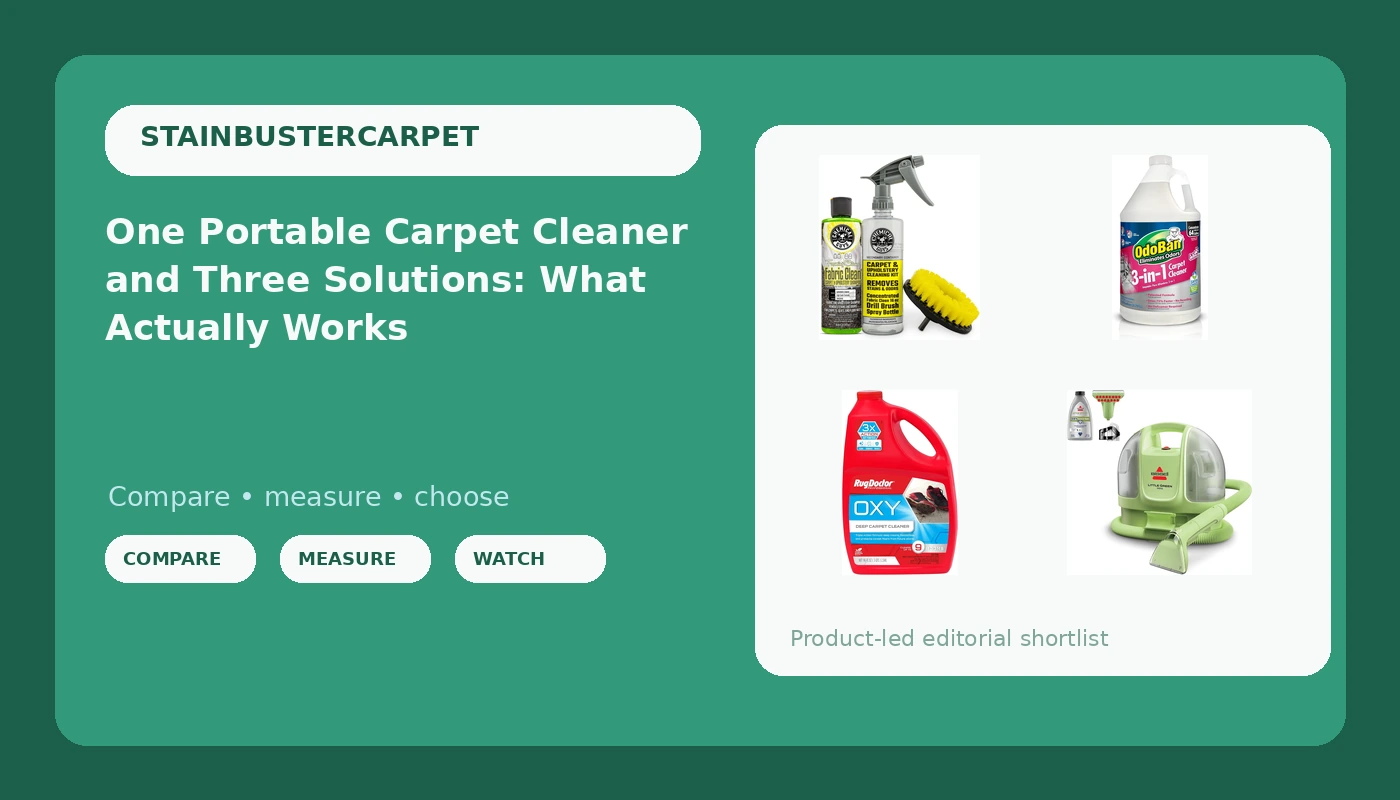
I've cleaned carpets in Phoenix for fifteen years, eight of them running my own residential cleaning business. That means I've seen more dirty-water tanks than most people have seen carpets, and I keep learning the same lesson: the machine gets all the credit, and the solution does half the work. So when a neighbor asks me what to buy, I don't give one answer. I give a short list. These are my carpet cleaner and solution picks, one portable machine for the jobs an upright cannot reach and three formulas that cover the three things that actually happen to carpet, which are spots, smells, and traffic lanes.
Here is how I judge anything that claims to clean carpet. The dirty-water tank is the honest spec, because it tells you what the machine actually pulled up. Dry time is the spec everyone ignores until the carpet is still damp on day two, which is how you grow a problem instead of removing one. Weight is a feature, because the machine you can carry up a staircase is the machine that gets used. And the solution is part of the machine, because a cheap machine fed expensive solution is not cheap at all.
The short answer: buy the portable machine for stairs, upholstery, and car interiors, buy the bulk 128 oz solution for the rooms, and keep the citrus foam and the oxy formula for the jobs the first two cannot reach. That combination covers most of what a household actually faces, and it costs less than one bad full-size purchase.
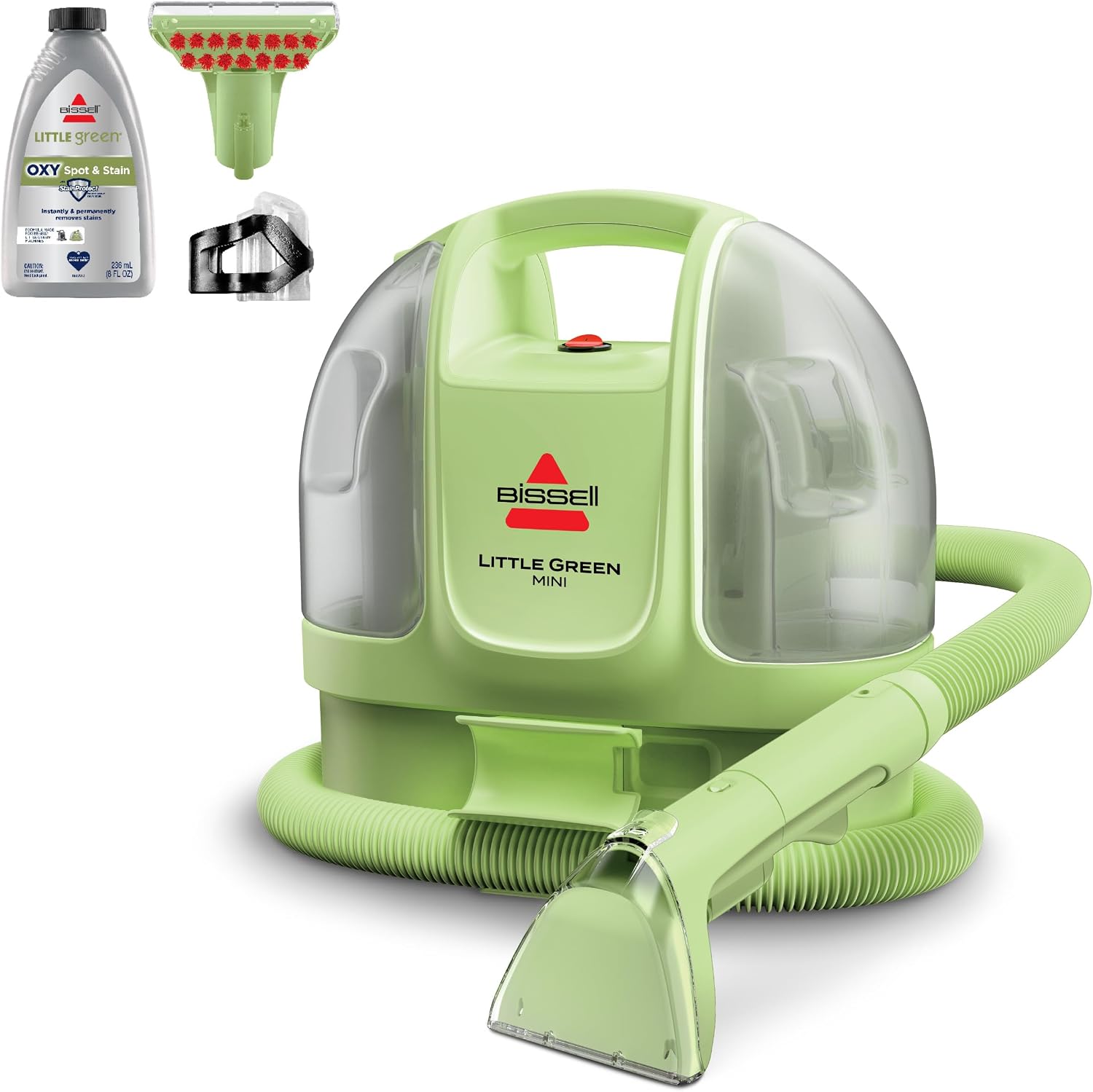
BISSELL Little Green Mini Portable Carpet Cleaner, 4075
The one piece here that reaches stairs, car interiors, and upholstery; small enough to carry in one hand, which is why it actually gets used
A mini tank means constant refilling on anything bigger than a spot; it is not a whole-room machine
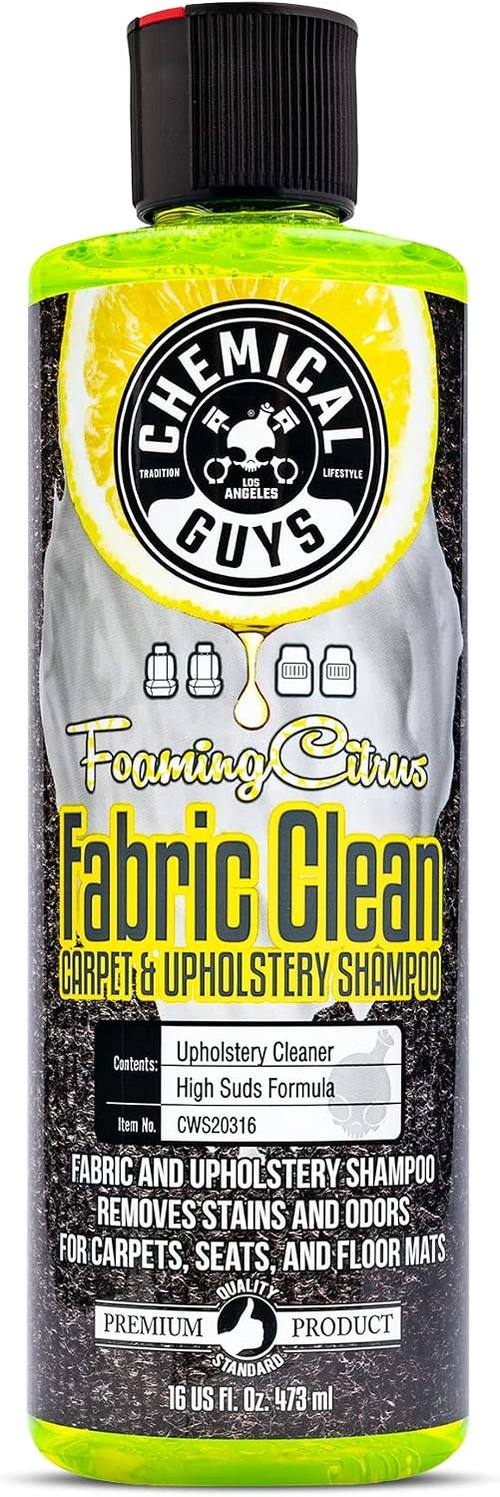
Chemical Guys, Citrus Foaming Fabric & Carpet Cleaner Drill Brush, 16 oz
Pairs chemistry with agitation, the step most people skip; citrus is the right call for grease and oils
16 oz is spot-treatment sizing, and the drill-and-brush workflow only happens if you actually set it up
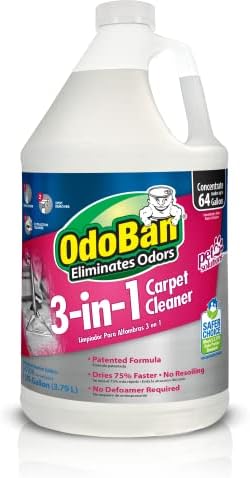
OdoBan 3-n-1 Carpet Cleaner, 128 Fl Oz
Bulk sizing keeps cost per load sane, and one formula is meant to clean, deodorize, and refresh in a single pass
Not a spot treatment and not an oxy formula; easy to over-mix, and over-mixed solution leaves residue
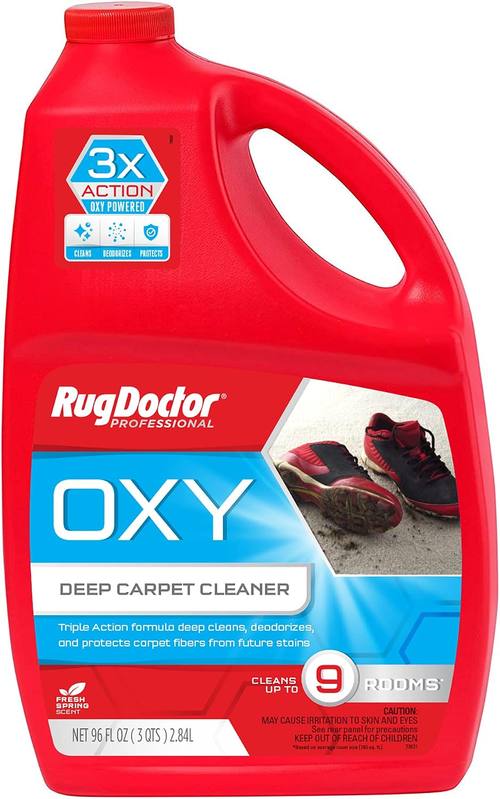
Rug Doctor Triple-Action Oxy Carpet Cleaner Deep Cleans, Deodorizes, and Refreshes Carpet & Upholstery, 96 oz., Daybreak Scent, Professional-Grade
Oxy chemistry for set-in organic stains like wine and pet accidents; the middle size suits one machine and a few rooms
Oxy is risky on wool and on stain-resist treatments, and the daybreak scent is a fragrance some people cannot tolerate
Prices and availability were captured from Amazon Creators API and may change.
How I judge a cleaner and a solution
Four things, in this order.
Recovery. How fast the tool lifts water back out of the fiber. Suction printed on a box is marketing. Water in the tank is evidence.
Dry time. Hours until the carpet is walkable. A carpet that stays wet is a carpet that smells, and no deodorizer fixes a wet pad.
Ergonomics. Can I lift it, empty it without spilling, and carry it up a flight of stairs? If the answer is no, it lives in a closet and cleans nothing.
Cost per load. This is where solution math beats machine math. A 128 oz concentrate and a 16 oz spot bottle are not competing on the same axis. One is for square footage, the other is for incidents.
The machine: BISSELL Little Green Mini Portable Carpet Cleaner, 4075
This is the piece most households are missing. A full-size upright is the right tool for an open living room, and I will defend that until I am hoarse. But an upright cannot clean a staircase landing, the crevice between a car seat and a console, or the arm of a sofa that a cat has claimed as a scratching post. That is portable work, and portable work is what this machine exists for.
The "Mini" in the name is doing real work, and you should read it as a warning as much as a feature. A small tank means you will refill it and empty it more often than you would with an upright. That is the trade for being able to carry it in one hand. My rule has always been that the machine you can actually lift is the machine that gets used, and a portable that lives on a shelf near the stairs gets used ten times more than an upright that lives in a garage.
What I would check before buying any portable: how the dirty tank empties, whether the hose and tool reach the tight spots you actually have, and whether the solution is sold in a size that makes sense for spot work. A portable that needs a gallon of solution for a two-foot stain is a machine with a hidden subscription.
Where it loses: it is not a whole-room machine, and no portable is. If your carpets are wall to wall and dirty everywhere, you will hate refilling a mini tank on your hands and knees. Buy the portable for the jobs it owns and use or rent an upright for the rest.
The solutions: three bottles, three different jobs
Three formulas, three jobs. That is the whole point of this list, and it is why I would not trim it to one.
Chemical Guys, Citrus Foaming Fabric and Carpet Cleaner Drill Brush, 16 oz
This is a spot tool, and it is the only entry here that brings agitation into the concept. The name says citrus, foaming, fabric and carpet, and drill brush, which tells you the intended workflow: foam it, agitate it with a brush driven by a drill, then extract it. Agitation is the step most people skip, and it is often the step that matters most on a stain that has already dried into the fiber.
The 16 oz size tells you it is not a whole-house product. It is a bottle you keep under the sink for the specific things that happen: a coffee ring, a pet accident you found late, the traffic lane by the front door. Keep it for incidents and it lasts a long time.
Where it loses: it is a small bottle at a spot-treatment price, and if you start using it on a whole room you will empty it in an afternoon. If your drill is in the garage and your brush is in a drawer, you also have to assemble the tool before you can use it. Some people never do, and that bottle sits.
OdoBan 3-n-1 Carpet Cleaner, 128 Fl Oz
This is the value entry, and it is the one I would pour into a machine. 128 fluid ounces is bulk sizing, the kind you buy when you are cleaning rooms rather than spots, and the 3-n-1 in the name suggests it is meant to clean, deodorize, and refresh in one pass rather than in three separate products.
For a household with a machine, this is the bottle that keeps cost per load sane. I keep a shelf of expensive solutions, and I will be the first to admit that most of them are not doing something a well-chosen bulk concentrate cannot do. Odor is the one place where bulk solutions earn their keep, because odor control is about volume and coverage, not about a fancy bottle.
Where it loses: it is not a spot treatment, and it is not an oxy formula. If you are chasing a stain that has oxidized into the fiber, this is the wrong tool. It is also the product on this list most likely to be diluted wrong, and a solution mixed too strong leaves residue that attracts new dirt. Follow the machine's dilution instructions, not your own instinct.
Rug Doctor Triple-Action Oxy Carpet Cleaner, 96 oz., Daybreak Scent
The name here is a mouthful, and most of it is descriptive: triple action, oxy, deep cleans, deodorizes, refreshes, carpet and upholstery, daybreak scent. The word I would focus on is oxy. Oxygen-based chemistry is what you reach for when the stain is organic and already set, because it works by oxidation rather than by surfactant alone.
"Professional-grade" is the manufacturer's phrase, not mine. I have used professional chemistry and I have used consumer chemistry, and the difference is usually concentration, not magic. What matters is that you match the formula to the fiber and the stain, and that you do not leave it sitting wet.
The 96 oz size sits between the spot bottle and the bulk jug, which makes it a reasonable middle purchase for someone with one machine and a few rooms.
Where it loses: oxy formulas are the ones most likely to cause trouble on wool or on carpet with a stain-resist treatment, and daybreak scent is a fragrance, which some people want and some people emphatically do not. If anyone in the house is sensitive to scent, that is a real consideration. Test in a closet first.
Machine versus solution: where the money actually goes
Most people overspend on the machine and underspend on the solution, then blame the machine. That is backwards.
Think about it as a system. A portable machine is a one-time purchase you will use for years. Solution is a recurring cost that scales with how much carpet you clean. That means the solution choice is the one that compounds, and the cheapest machine paired with the most expensive solution is not the cheapest setup.
The other thing to understand is that these four products are not four versions of the same thing, and the table above should not be read as a ranking. It is a kit. The machine does the extraction, the bulk solution does the rooms, the oxy formula does the set-in organic stains, and the citrus foam with the drill brush does the agitation on spots. Buying one of them and expecting it to cover everything is how people end up disappointed with all four.
Matching solution to machine without wrecking either
Two rules.
First, dilution. Every machine has a recommended ratio, and it exists for a reason. Solution mixed too strong leaves a sticky residue that attracts new dirt, and it foams in the tank, which is a mess to empty and a worse thing to leave sitting in the machine. I have watched people strip color out of a carpet with the wrong mix. Never again.
Second, chemistry and fiber. Oxy is excellent on food dye, wine, and pet accidents, and it is risky on wool and some natural fibers. Citrus is excellent on grease and oils. A neutral bulk concentrate is the safe default for anything you are unsure about. When in doubt, test in a closet and wait a full day before you commit to the room.
Who should buy what
If you have a staircase, a couch, and one carpeted bedroom: the portable machine plus the bulk solution. That is the core kit.
If you have pets: add the oxy formula, because pet accidents are the classic set-in organic stain, and they are the ones that come back as odor when the humidity rises.
If you have a specific problem spot and no machine: the citrus foam and drill brush gets you agitation and chemistry without buying hardware. It is the cheapest entry on this list.
If you already own a full-size upright and have wall-to-wall carpet: the bulk solution and the oxy formula, and skip the portable until you have a car interior or a stairwell to deal with.
What I'm testing next
I keep a logbook of which machines pull the most water, because the dirty-water tank is the honest spec. Right now I am working through portables on a real staircase with real dirt and a dry-time clock on every step. The question I want answered is whether small-tank machines actually dry faster than uprights when both are used correctly, because that is the number that decides whether a portable is a convenience or a compromise.
Until then, my advice stays the same. Buy for your biggest cleaning job, not your ideal one, and buy the solution for the job the machine cannot do.