I have cleaned carpets for a living for fifteen years, eight of them running my own residential business in Phoenix, and in that time I have learned that a carpet cleaner comparison is really a comparison of three things: what the machine pulls out of the fiber, how long the carpet stays wet afterward, and whether you can carry the thing up a staircase without regretting it. Everything else, the branding, the "professional grade" language, the attachments you will use twice, is noise.
I keep a logbook of dirty-water weights because the tank does not lie. If the tank comes out clear, the machine did not clean. That one measurement has saved me from more bad purchases than any spec sheet, and it is the lens I use on the four products below: a compact upright, a spot cleaner, a cordless machine, and the solution that goes in all of them. Buy for your biggest realistic cleaning job, not your ideal one. Most people overbuy for a stairwell and end up with a machine too heavy to haul out of the closet.
For most homes, the compact upright is the pick. The Hoover PowerDash Pet Advanced Compact Carpet Cleaner Machine covers the widest range of real jobs, from a hallway to a set of stairs, without the weight penalty that keeps full-size machines parked in the garage. The other three products are not worse. They are narrower. If you buy for the job you actually have, you will end up with the compact upright plus a bottle of solution and you will be done.
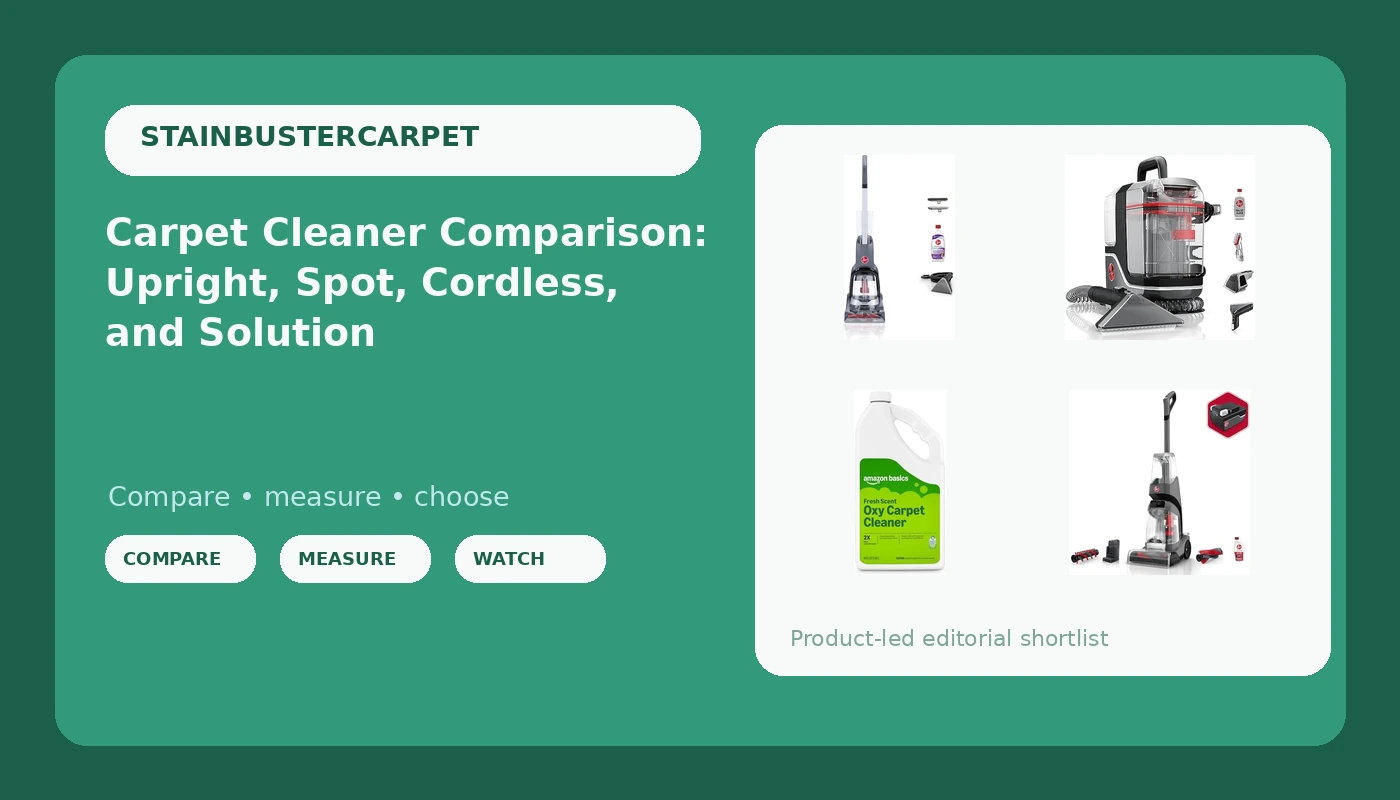
Hoover PowerDash Pet Advanced Compact Carpet Cleaner Machine with Above Floor Cleaning
Compact and light enough to carry upstairs, with above-floor cleaning for upholstery and step edges
Smaller tank means more refill trips in large open rooms
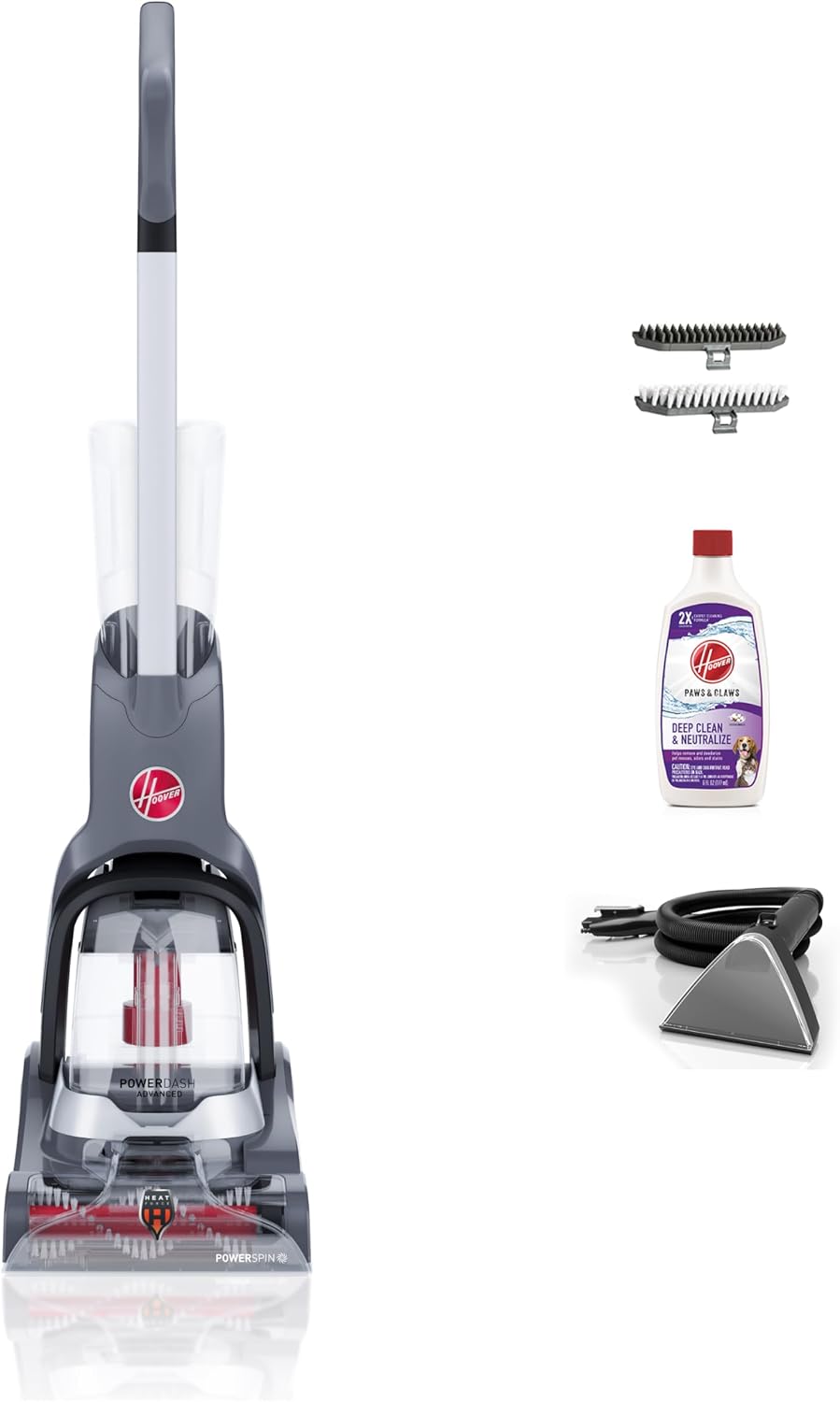
Hoover CleanSlate XL Deep Cleaning Carpet + Upholstery Spot Cleaner Machine
Purpose-built for stairs, couches, and car interiors, where a full-size upright cannot reach
You work on your hands and knees, and the tank sets the limit on how much you finish per fill
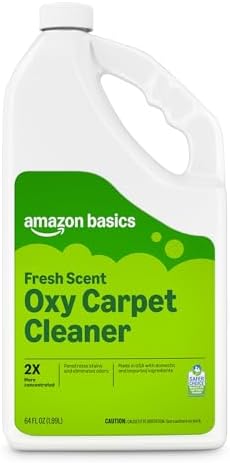
Amazon Basics Carpet Cleaner, Carpet Stain Remover, Fresh Scent, 64 fl oz
A large bottle that keeps the per-job solution cost down, in a fresh scent
Packaging may vary, and the formula has to be dosed correctly or it leaves residue
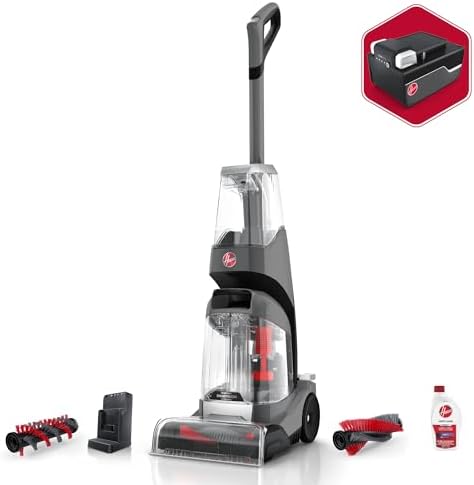
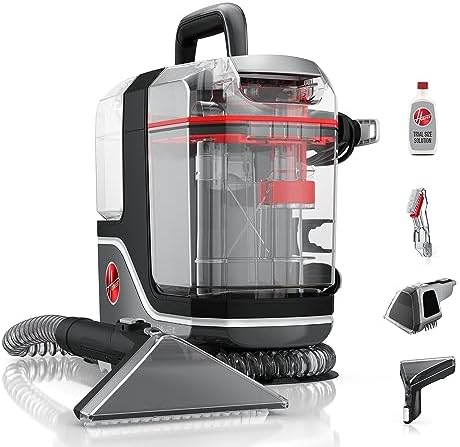
Hoover ONEPWR SmartWash Cordless Carpet Cleaner Machine
No cord to fight, so it comes out for a small spill in seconds instead of after a setup ritual
Battery runtime and small tanks make it a spot tool, not a whole-room machine
Prices and availability were captured from Amazon Creators API and may change.
How I judge a carpet cleaner, and how you can too
Every machine gets the same three checks, and none of them involve a spec sheet.
The first is the dirty-water test. I weigh the recovery tank empty, clean a measured section of a genuinely dirty carpet, and weigh it again. The difference is the proof of work. A machine that leaves a clear tank did not clean anything, no matter what the box claims. You can run a version of this at home with a kitchen scale. It costs nothing and it tells you more than the marketing copy.
The second is a dry-time clock. I start timing when the machine stops and stop when the carpet is walkable in socks. Dry time matters more than suction power on paper, because a carpet that stays damp for two days is a mold problem, not a result. Recovery, how fast the brush roll lifts water back out of the fiber, is what actually drives that number.
The third is a weight check with the tank full, because I have a back and so do you. Weight is a feature. A machine that is a pain to haul gets used less, and a machine that gets used less cleans worse than a mediocre one that lives by the stairs.
When I look at these four products, I am asking which of those three tests each one is built to pass.
The compact upright: the machine most homes should buy first
An upright with a powered brush roll agitates the fiber, and agitation is half of cleaning. The Hoover PowerDash Pet Advanced Compact Carpet Cleaner Machine takes that upright design and shrinks it. Light enough to carry up a staircase, small enough to store in a hall closet, and it includes above-floor cleaning, which is the tool you use on a couch cushion, a mattress edge, or the nose of a stair tread where dirt collects.
Where it wins is range. It handles a hallway, a bedroom, a rug, and the stairs on the same afternoon without a second machine. Where it loses is volume: a compact tank means more trips to the sink on a big open room, and the brush and suction are tuned for residential messes rather than a rental-grade deep extraction. That is a fair trade for anyone who is not cleaning 2,000 square feet of wall-to-wall on a schedule.
If you are pairing it with a solution, use the dose on the label and no more. Over-pouring is how people end up with sticky residue that attracts dirt back into the carpet within a week.
The spot cleaner: the tool you will actually use weekly
Portable cleaners beat full-size machines for stairs and couches. Full-size beats portable for open rooms. That is not a brand opinion, it is geometry. The Hoover CleanSlate XL Deep Cleaning Carpet + Upholstery Spot Cleaner Machine is built for the jobs where an upright physically cannot go: the landing, the treads, the sofa, the car footwell, the spot under the dining table where the chair legs trap everything.
The XL in the name points at the part that matters for a spot machine, which is how much area you can finish before you stop to empty and refill. A spot cleaner with a tiny tank turns a fifteen-minute job into a thirty-minute job with two interruptions, and interruptions are where motivation dies.
The honest downsides: you are on your hands and knees, the hose and head take some getting used to, and you will not clean a whole living room with it in one pass. What you get in exchange is the machine that comes out for a fresh spill at 11 p.m. instead of the one that stays in the garage because setup takes twenty minutes.
Cordless: convenience you pay for in runtime and tank size
The Hoover ONEPWR SmartWash Cordless Carpet Cleaner Machine solves the problem that keeps most carpet cleaners in storage, which is friction. No cord to unwind, no outlet to find, no tripping hazard on a staircase. For a small apartment, a single spill, or a car interior in a driveway, that is a real advantage and not a gimmick.
The trade-off is physics. A battery has to run a pump, a brush motor, and a vacuum, and the tanks have to stay light enough to carry, which means both the clean and dirty sides are smaller than on a corded machine. My rule for cordless carpet cleaners is simple: the honest question is not whether cordless is convenient, it is whether the battery outlasts the job you bought it for. If your jobs are spots measured in minutes, cordless is the fastest tool in this group. If your jobs are rooms measured in square feet, you will be reaching for a corded machine halfway through, and a dead battery mid-job is worse than a cord you have to plug in.
Buy it as the second machine, not the only machine, unless your cleaning is genuinely spot-sized.
The solution is part of the machine
This is the part of the budget most people skip, and it is the part that decides whether a cheap machine stays cheap. A machine that costs less up front but demands an expensive bottle every few weeks is not a bargain. The Amazon Basics Carpet Cleaner, Carpet Stain Remover, Fresh Scent, 64 fl oz is the budget route: a large bottle in a straightforward fresh scent, which keeps the per-job cost of solution low enough that you actually use the machine instead of saving it for a special occasion. The packaging may vary, so do not be surprised if the bottle that arrives looks different from the listing photo.
Two rules I follow with any formula. First, dose it exactly as the label says. Foamy solution leaves residue, residue grabs dirt, and the carpet looks worse in ten days than it did before you started. Second, check the machine's manual before you put anything in the tank, because some formulas and some machines do not get along, and the wrong one can cost you a warranty.
The trade-offs the comparison table cannot show
A table can tell you which machine fits which job. It cannot tell you about the details that decide whether you enjoy owning the thing.
Emptying matters. A recovery tank with a wide opening and a real handle gets emptied without a spill down the front of your cabinets. A tank with a narrow neck and a snap lid gets emptied once and then avoided. Look at the shape of the tank opening in the listing photos before you buy, because you will empty it every single time you clean.
Hose and cord length matter. A short cord means hunting for an outlet in the middle of a job, and a short hose means dragging the machine onto the step you are cleaning.
Brush roll access matters if you have pets or long hair in the house. A brush roll you can pull out and clean in two minutes is a machine that keeps working. One you need a screwdriver and patience for is a machine that slowly loses its agitation.
Storage footprint matters. Measure the closet or the garage shelf before you buy, not after.
And the limit nobody wants to hear: not every stain comes out. Some stains are furniture now. Pet urine that has soaked into the pad, dye that has bonded to the fiber, and anything that has been set by heat are all in a different category from a fresh spill. A cleaner can improve them. Nothing in this comparison erases them, and any listing that promises otherwise is selling you hope.
What I would buy, in order
If I were setting up a house from scratch, here is the order I would spend in.
First, the compact upright. It is the machine that handles the most common jobs in a home, it stores easily, and it pairs with a straightforward solution. That is the core purchase, and for a lot of households it is the only one needed.
Second, the solution. Buy the large bottle and dose it correctly. Running out of solution is the most common reason a working machine gets left in the closet for six months.
Third, the spot cleaner, if you have stairs, upholstered furniture, pets, or kids. This is the machine that handles the accidents that happen between deep cleans, and it reaches places the upright cannot.
Fourth, the cordless machine, if your cleaning is genuinely spot-sized or you want something you can grab without setup. It is a convenience purchase, and it is a good one, as long as you are honest about runtime and tank size before you buy rather than after.
Bottom line
A carpet cleaner comparison comes down to matching the tool to the job. The compact upright is the best single purchase for most homes because it covers the widest range of real cleaning without being a burden to use. The spot cleaner earns its place for stairs and upholstery. The cordless machine wins on speed and loses on stamina. And the solution is not an accessory, it is part of the machine, priced in every time you fill the tank.
Weigh your dirty water, time your dry time, and check the weight with the tank full. Those three numbers will tell you more about a machine than any claim printed on the box.