I cleaned houses in Phoenix for fifteen years and ran my own residential cleaning business for eight of them. My back has an opinion about every machine I have ever picked up, and my logbook has a page for every carpet I have pulled water out of. The dirty-water tank is the honest spec. A manufacturer can print whatever suction number it wants on the box, but the tank tells you what actually came out of the fiber. That is the standard behind this carpet cleaner comparison, and it is why the four products below are not four versions of the same thing.
Related: Carpet Cleaner Buying Guide For Stairs And Upholstery
Here is the short version: the cordless portable is the only true carpet cleaner in this group, the stick vacuum is the maintenance tool that keeps deep cleaning from being needed as often, the brush does the agitation work almost everyone skips, and the spray handles the odor and allergen load that water alone leaves behind. Buy them in that order of importance. The price order is almost exactly reversed, which is the part nobody enjoys hearing.
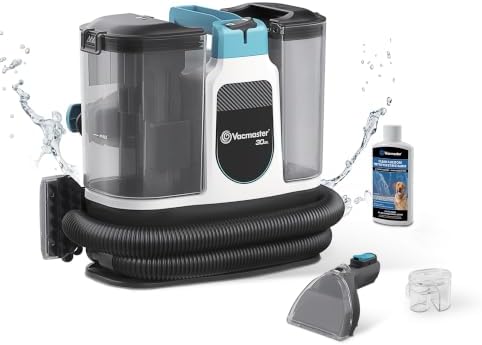
Vacmaster 600 Series Cordless Portable Carpet & Upholstery Cleaner Machine
The only unit here that extracts: it lifts suspended soil and water into a dirty tank, and cordless portability makes stairs, couches, and car seats realistic jobs
Small-tank, battery-powered work means sessions with refills, not a whole house in one pass, so dry time is on you to manage
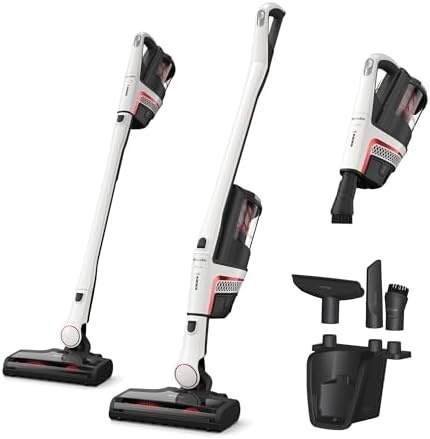
Miele Triflex HX1 Battery Powered Bagless Stick Vacuum, Lotus White
Fast dry-soil removal, light enough to actually use daily, reaches edges and above-floor surfaces without dragging out an upright
It is a vacuum, not an extractor. It will not touch stains, odor, or embedded soil, and it is not a substitute for wet cleaning
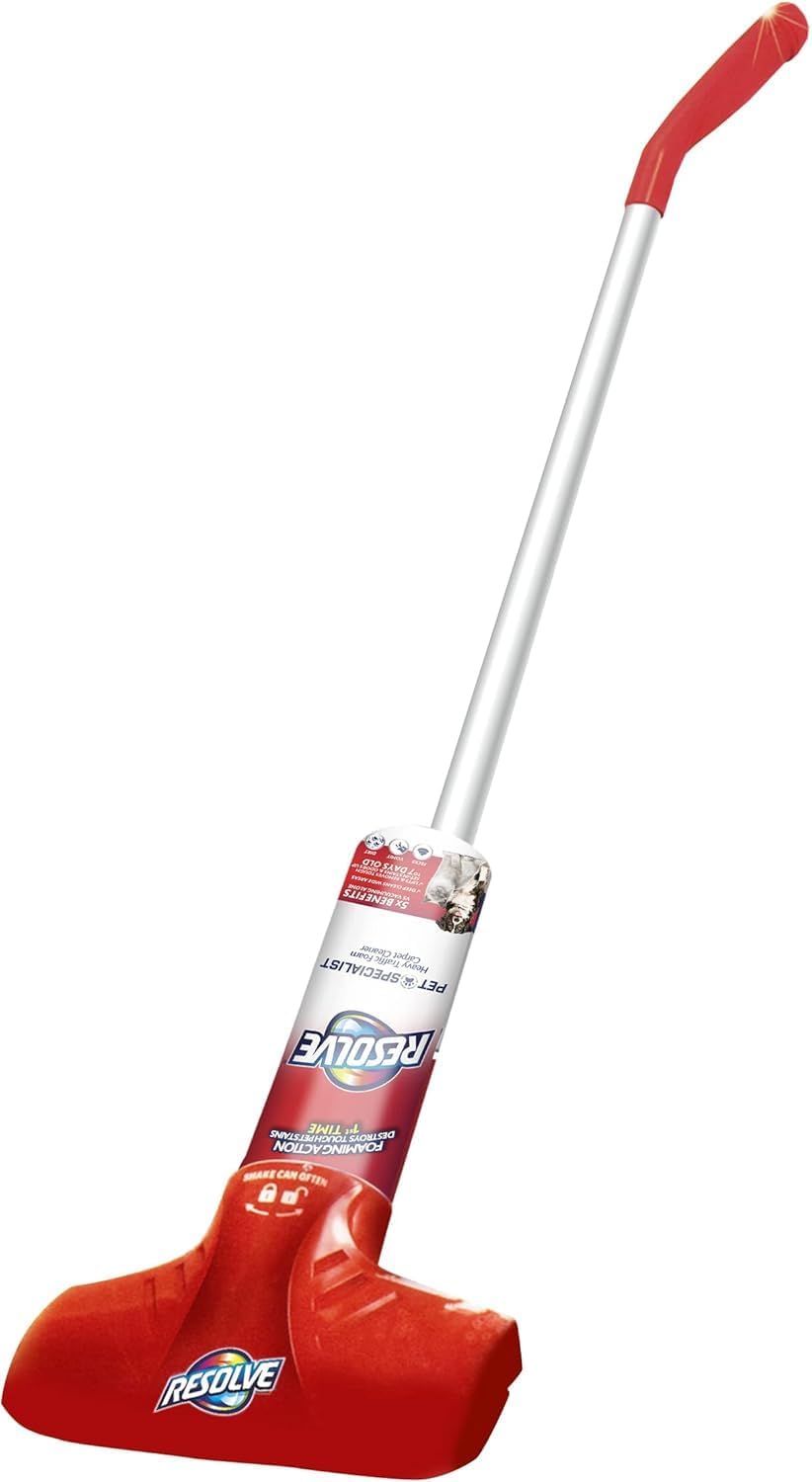
Re'Solve Expert Easy Clean Carpet Cleaner Gadget Brush
Mechanical agitation opens the pile and works solution into the base of the fiber where soil actually sits, and it costs a fraction of a machine
Your arm is the motor. It agitates only, with no extraction and no drying, so it supports a machine rather than replacing one
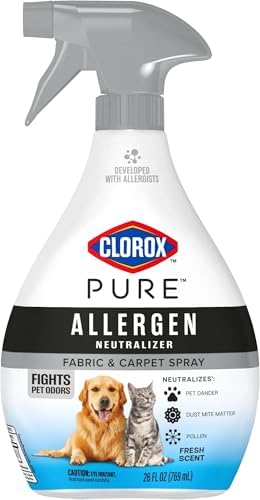
Clorox PURE Allergen Neutralizer Fabric and Carpet Spray, Fights Pet Odors, Fresh Scent, 26 Fl Oz.
Handles odor and allergen chemistry on fabric between deep cleans, including upholstery you cannot safely extract
It is chemistry, not cleaning power. It removes no soil and no water, and overspray leaves residue that attracts more dirt
Prices and availability were captured from Amazon Creators API and may change.
How I judge a carpet cleaner
Four checks, every time, and none of them come from a product page.
Dirty water. I weigh the tank before and after. That number is the review. A machine that comes back with a clear tank did not clean anything, no matter how good the carpet looked when it was still wet.
Dry time. Hours until the carpet is walkable. Wet carpet for two days is not a result, it is a mold factory. Everything I recommend gets judged partly on how quickly the fiber comes back to dry.
Weight and emptying. A heavy machine that is miserable to carry and spills when you dump it gets used less, and a machine that gets used less cleans worse. Ergonomics are a cleaning spec, not a comfort feature.
Solution cost. The cleaning solution is part of the machine. A cheap unit that only works with expensive chemistry is not cheap.
Only one of the four products in this comparison is built to pass all four checks. The other three exist to support it.
The cordless portable: where recovery actually happens
The Vacmaster 600 Series Cordless Portable Carpet & Upholstery Cleaner Machine is the only product in this group that is a carpet cleaner in the sense most people mean. It sprays solution into the fiber, agitates, and pulls the dirty water back into a tank you can carry to the sink. Recovery is the actual cleaning power, and this is the only unit here with any.
The cordless format is why it earns a spot for the jobs that matter most in a real house: stairs, landings, couch cushions, the driver's seat of a car, and the spot under a dining chair that nobody admits to. A full-size upright is better for an open living room, and I have said that for years, but the machine that gets used on a staircase is worth more than the machine that stays in the garage.
Where it loses: tank size and battery time. Portable extraction is done in sessions. You fill, you work an area, you dump, you refill. That is not a flaw, it is the format, but it means the operator has to be disciplined. Do extra dry passes, run a fan, and open a window. If you leave the carpet damp because you ran out of patience, you undid your own work. I have never met a portable that did not want a second pass on a client's stairs, and I do not expect this one to be the exception.
The stick vacuum: dry soil before wet cleaning
The Miele Triflex HX1 Battery Powered Bagless Stick Vacuum, Lotus White is not a carpet cleaner, and I want that stated plainly because the confusion costs people money every year. It is a dry vacuum. Its job is soil removal before water ever touches the carpet.
That job is not optional. Most of what makes a carpet look dull is dry particulate sitting in the pile, and grit abrades fiber every time someone walks on it. If you wet-clean a carpet without vacuuming first, you are not cleaning, you are making mud and pushing it deeper. A stick vacuum that is light enough to grab daily does more for carpet appearance over a year than a deep cleaner that comes out twice.
Where it wins: daily maintenance, edges, stairs, upholstery, and hard-to-reach corners, with no cord to fight. Where it loses: it cannot address stains, pet accidents, odor, or the embedded soil at the base of the pile. Battery runtime is always the trade-off with a cordless stick, so match it to the size of the area you actually clean in one sitting, and empty the bin often because a full bin kills airflow.
The manual brush: agitation is the missing step
The Re'Solve Expert Easy Clean Carpet Cleaner Gadget Brush is the cheapest thing in this comparison and the one most people skip. That is a mistake. Agitation is the step that lifts the pile, opens the fiber, and drives solution down to where the soil lives instead of leaving it on top.
Portable machines rarely have strong brush action, and on stairs you are often working at an angle where the machine's own brush cannot make good contact. Hand agitation before extraction changes what comes out of the carpet in the tank, and it is the difference between a surface wipe and a real clean on traffic lanes and pet spots.
Where it wins: no cord, no battery, no learning curve, and it works with whatever solution you already use. Where it loses: it is manual labor, and it does not extract, rinse, or dry anything. It is a force multiplier for a machine, not a machine.
The spray: chemistry for odor and allergens
The Clorox PURE Allergen Neutralizer Fabric and Carpet Spray, Fights Pet Odors, Fresh Scent, 26 Fl Oz. is chemistry, and chemistry is a legitimate part of a carpet routine. Odor is not a stain, it is a compound, and pet accidents leave salts in the backing that re-wick and smell again when humidity rises. A fabric spray formulated for allergen and odor neutralization handles that layer between deep cleans, and it is the practical option for upholstery and mattresses that should not be soaked.
Where it wins: fast, low effort, useful on surfaces you cannot extract, and it addresses the odor and allergen side of carpet ownership that a machine alone ignores. Where it loses: it removes no soil and no water. If the carpet is dirty, a spray makes a dirty carpet smell better. Over-application is also a real risk. Foamy solution and residue are two of my least favorite things to find on a client's carpet, because residue attracts new dirt and you end up cleaning more often. Test any spray on a hidden corner for colorfastness first, and go light.
Matching the tool to the job
- Whole room with real embedded soil: portable extractor, plus a vacuum pass first.
- Stairs, couch, car interior, spot treatment: portable extractor, because that is what it is for.
- Pet accident between deep cleans: spray for the odor compounds, brush for agitation, then extraction when you can.
- Weekly upkeep: stick vacuum, and be consistent about it.
- Every job: dry time management. Air movement, extra dry passes, and patience.
The trade-offs are not close. The extractor does the work that matters and demands the most effort and attention. The vacuum protects the carpet and gets used constantly. The brush makes the extractor better for a very small amount of money. The spray buys you time between deep cleans. None of them replaces another.
What these four will not do
They will not remove every stain. Some stains are furniture now, and any product promising otherwise is selling confidence. They will not fix a carpet that has been wet for a week, and they will not compensate for skipping dry soil removal. A stick vacuum is not a carpet cleaner and a spray is not extraction, no matter how the packaging reads.
The bottom line
If you own carpet, start with the extractor, because it is the only tool here that removes dirty water, and dirty water is the proof of work. Add the stick vacuum to keep the carpet from needing the extractor as often. Add the brush before your next deep clean and watch what the tank looks like afterward. Keep the spray for the days in between, and use it sparingly. That combination covers the whole cycle: dry soil, agitation, extraction, and odor chemistry. Buying only one of them is how people end up frustrated with all four.