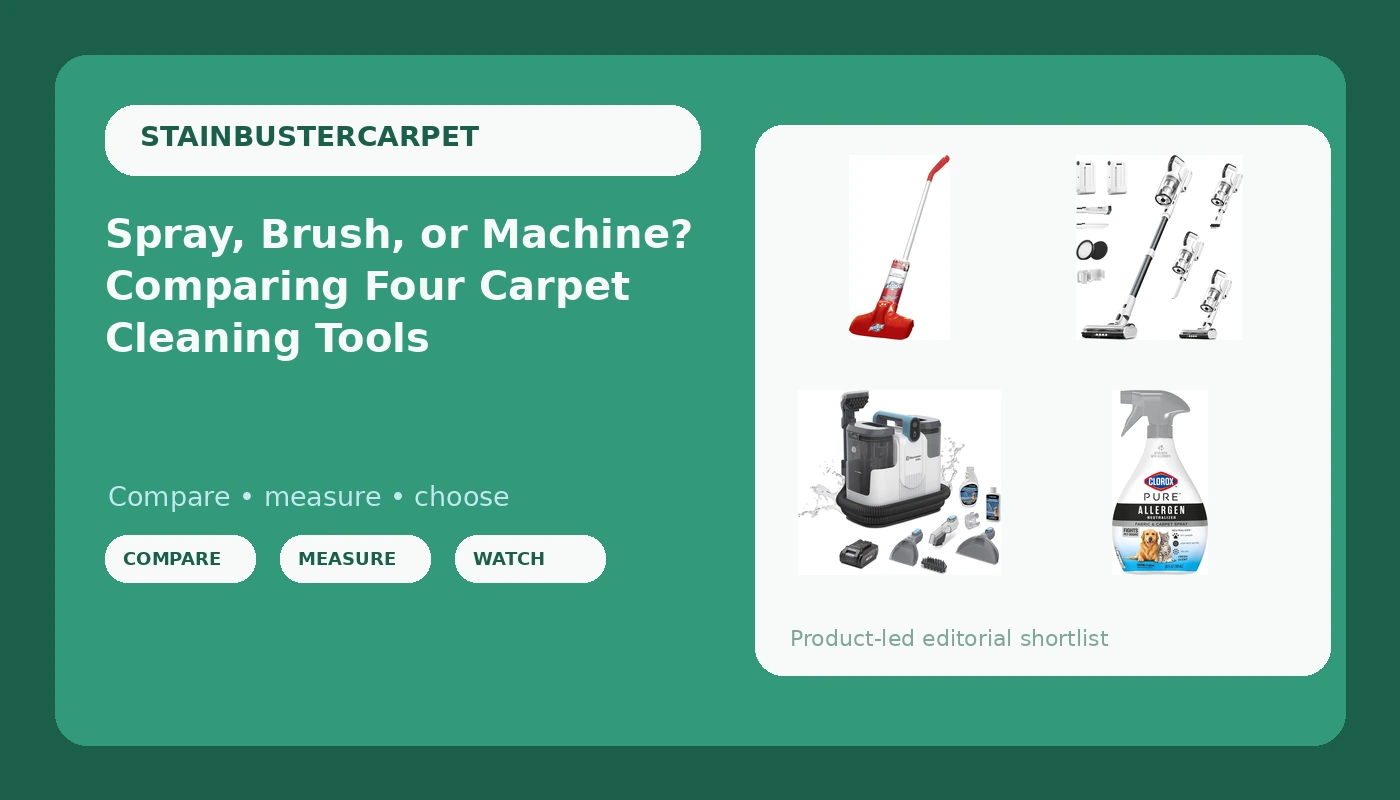
Most carpet messes are not one problem. They are three. There is the dry debris sitting on top of the pile, the sticky soil that has bonded to the fiber, and the odor that stays behind long after the visible stain is gone. Buying one product and expecting it to handle all three is how people end up frustrated with a closet full of half-used bottles. I have cleaned carpets professionally for 15 years and ran my own residential cleaning business for eight of them, and my kit has never been one machine. It has always been a short list of carpet cleaning tools, each pointed at a specific failure.
The four products in this comparison are deliberately not the same kind of thing. One is a manual brush gadget, one is a cordless stick vacuum, one is a cordless portable extraction machine, and one is a spray. Two of them remove material from the carpet. Two of them do not. Knowing which is which before you spend anything is most of the decision.
For most homes, the Vacmaster 600 Series Cordless Portable Carpet & Upholstery Cleaner Machine is the only product in this group that does the actual cleaning, because it is the one built to put solution into the fiber and pull dirty water back out. Everything else supports it: the Klarpul stick vacuum for dry debris and pet hair before the carpet gets wet, the Re'Solve brush gadget for working a single spot by hand, and the Clorox PURE spray for odor and allergen control between deep cleans.
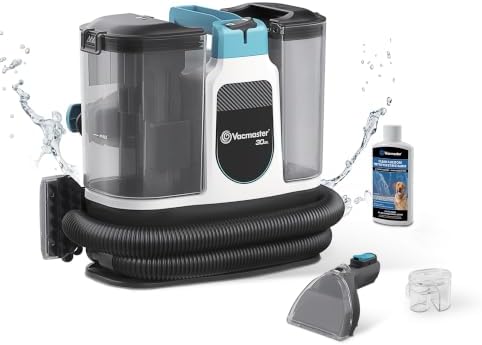
Vacmaster 600 Series Cordless Portable Carpet & Upholstery Cleaner Machine
The only wet extraction tool here, cordless, and sized for the jobs a full-size upright cannot reach
Runtime is finite, and a whole open room is still a corded upright's job
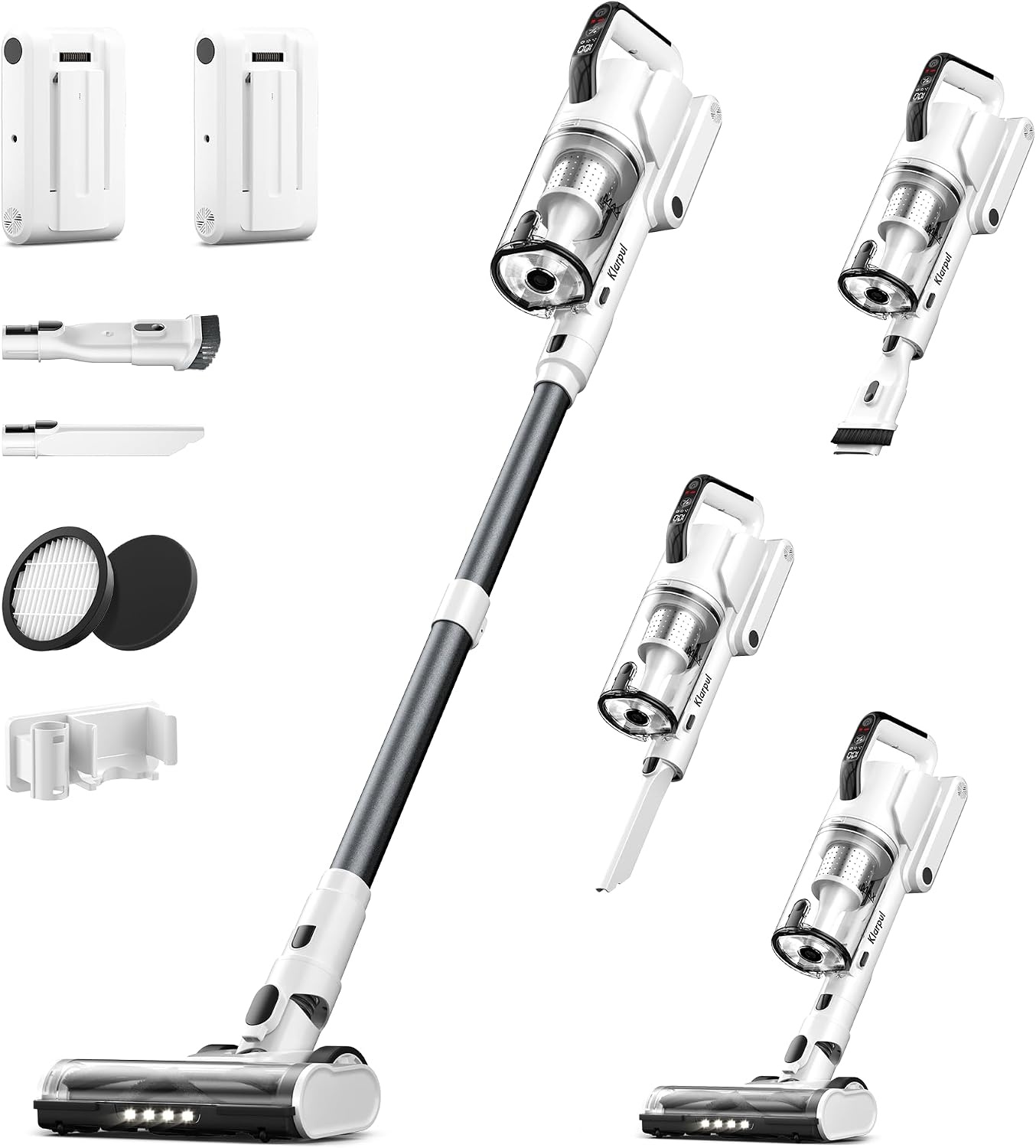
Klarpul Cordless Vacuum Cleaner, 2 Batteries 140 Mins Runtime 600W 50Kpa Stick Vacuum Cordless, Self-Standing Vacuum Cleaners for Home with 2.5H Fast Charging, for Floor/Carpet/Pet Hair, White
Dry pickup first, two batteries, self-standing, and pet hair is named in the spec
It is a vacuum, not an extractor. It will not lift a set stain or pull liquid out of the pad
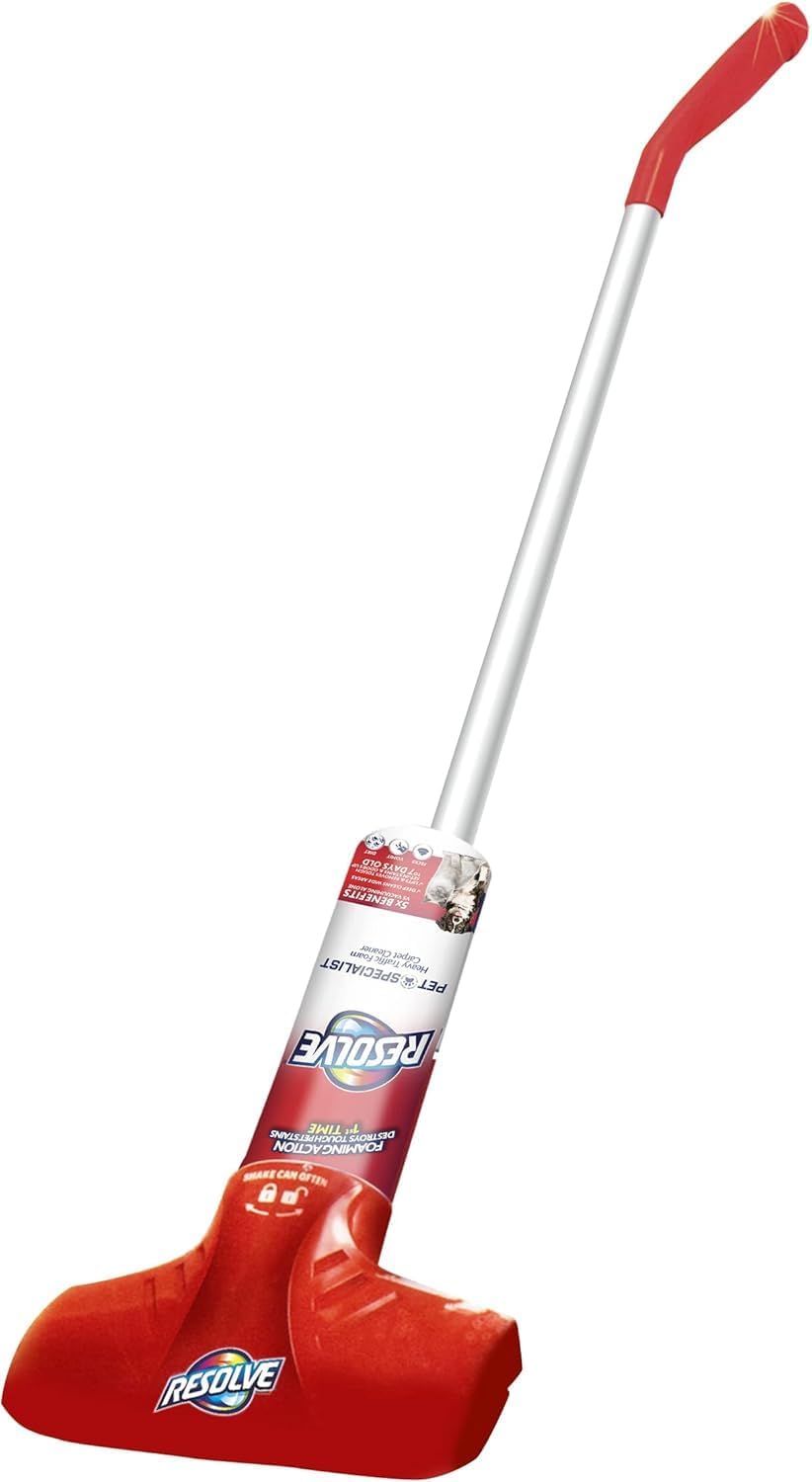
Re'Solve Expert Easy Clean Carpet Cleaner Gadget Brush
The cheapest way to work a spot by hand, no power, no tank to empty, no setup
Elbow grease is the runtime, and it is not a whole-room tool
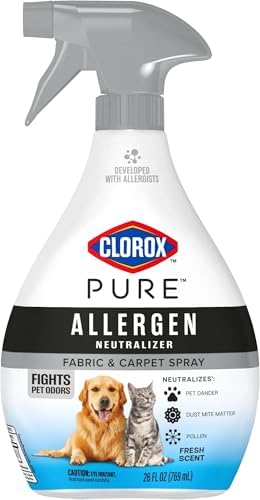
Clorox PURE Allergen Neutralizer Fabric and Carpet Spray, Fights Pet Odors, Fresh Scent, 26 Fl Oz.
Lowest cost of entry, targets odor and allergens, useful between deep cleans
It neutralizes odor. It does not lift soil out of fiber, and it is not a cleaner
Prices and availability were captured from Amazon Creators API and may change.
How I judge carpet cleaning tools
I do not trust the suction number on the box. I trust the dirty water tank. That tank is the proof of work. If it comes out clear, the machine did not clean, no matter what the marketing claims about suction power or "professional results." When I evaluate a cleaner, I weigh the tank before and after a pass over a real stained carpet. The difference is the review.
The second thing I clock is dry time. A carpet that stays wet for two days is not a clean carpet, it is a mold farm. Recovery, which is how fast the tool lifts water back out of the fiber, matters more than how much water it puts in. A machine that soaks deep and leaves it there is worse than a machine that cleans shallower and pulls the moisture back.
The third thing is weight and ergonomics, because my back is the honest reviewer. A 30-pound machine that is a pain to haul up a staircase gets used less, and a machine that gets used less cleans worse. This is why portables beat full-size cleaners on stairs and couches, and why full-size uprights still beat portables in an open living room. Buy for the job you actually have, not the job you imagine.
The extraction machine: Vacmaster 600 Series
If you are going to own one thing on this list, own this one. The Vacmaster 600 Series Cordless Portable Carpet & Upholstery Cleaner Machine is the only product here that performs wet extraction, which is the process that actually removes soil from carpet instead of moving it around. Solution goes into the fiber, the machine agitates, and then it pulls the dirty water back into a tank you can see. That visible tank is the entire point.
Portable is the right form factor for a cordless machine, because the jobs where a portable earns its keep are the ones a corded upright cannot reach: the staircase, the landing, the couch cushions, the car seats, the spot under the dining table where the chair legs trap everything. Those are also the jobs where you want to be in and out quickly, and a cordless machine with no cord to drag or trip over makes that possible.
The honest limitation is runtime. Any cordless extractor is working against a battery, and a large open room with wall-to-wall carpet will outlast most of them. If your main project is a whole living room, a corded upright is still the better tool, and I will not pretend otherwise. But for stairs, upholstery, pet accidents, and spot work, a cordless portable is the machine that gets pulled out of the closet instead of the one that stays in it.
The dry vacuum: Klarpul cordless stick
Here is where I have to be blunt, because this is the most common mistake I see in carpet cleaning advice. The Klarpul Cordless Vacuum Cleaner is a vacuum, not a carpet cleaner. Those are different tools with different jobs, and confusing them leads people to expect a stick vacuum to remove a set stain. It will not. No vacuum will, because suction lifts dry debris and does not dissolve bonded soil.
What it does do is the step that has to happen first. Dry soil is abrasive, and running an extractor over a carpet that is still full of grit means you are grinding sand into the fiber while you get it wet. Vacuum first, always. The Klarpul's listed specs make it a reasonable candidate for that job: two batteries, a 140 minute runtime figure, 600W, a 50Kpa suction rating, 2.5 hour fast charging, a self-standing design so it does not need to lean on a wall, and pet hair named as a target. The two-battery arrangement is the part I care about most, because a spare battery is the difference between finishing the upstairs and waiting on a charger.
For pet hair specifically, a stick vacuum with a powered brush roll is the right first pass. Hair wraps around a brush bar and comes up in a mat, and it is much easier to pull that out of a vacuum canister than out of a wet extractor's tank. Get the dry stuff up, then decide whether the carpet needs a wet pass at all. Half the time it does not.
The hand tool: Re'Solve Expert Easy Clean brush
Every kit needs one thing that works without power. The Re'Solve Expert Easy Clean Carpet Cleaner Gadget Brush is a manual gadget brush, and its value is that it has no tank, no battery, no cord, and no setup. When a single spot appears ten minutes before guests arrive, you are not dragging out a machine. You are working the spot by hand.
A brush like this does two things well. It agitates the fiber so that whatever solution you apply can reach the soil instead of sitting on top of it, and it lifts the surface debris that a vacuum missed. On a low-pile carpet or a synthetic area rug, agitation is often the missing step. People spray, they blot, they spray again, and they never work the fiber, then they blame the solution.
Where it loses is scope. Elbow grease is the runtime, and nobody's elbow lasts through a whole room. It is also not a substitute for extraction on a spill that has reached the pad. If liquid has gone through the backing, a brush will not get it out, and a brush plus a spray will leave moisture sitting in the pad where it can turn into odor. This is a spot tool and a prep tool, and it is honest about that.
The spray: Clorox PURE Allergen Neutralizer
The Clorox PURE Allergen Neutralizer Fabric and Carpet Spray is the product here that is least like a cleaner, and that is not a criticism. It is a 26 fluid ounce fabric and carpet spray aimed at allergens and pet odor, with a fresh scent. It does the job that extraction does not: the smell that comes back three days after the carpet is dry.
I want to be precise about what this kind of product can and cannot do. It neutralizes odor and it addresses allergens on fabric surfaces. It does not lift soil out of fiber, and using it on a stained carpet instead of cleaning the carpet will leave you with a clean-smelling stain. The order matters: extract or clean first, let the carpet dry, then treat odor. Spraying a wet carpet just adds another layer of moisture and dilutes whatever you are trying to do.
Where it earns its place is maintenance. Between deep cleans, on the couch, on the dog's favorite corner of the rug, on the car seats, a spray like this is the cheap insurance that keeps a house from smelling like it has pets. It is also the lowest cost of entry on this list by a wide margin, which makes it the easiest one to add to a cart without thinking about it.
The trade-offs nobody puts on the label
The first trade-off is that the cleaning solution is part of the machine. A cheap machine that only works with expensive proprietary solution is not cheap, and a machine with a big tank that drinks solution is not cheap either. Before you commit to a system, look at what the refills cost, because that is the bill that keeps arriving.
The second trade-off is tank design. I have owned machines that cleaned beautifully and spilled half the dirty water down the front of the base when I emptied them. That is a design failure, not a user error, and it is the kind of thing you only learn after the first emptying. A dirty water tank with a wide mouth and a real handle gets emptied without a towel underneath it.
The third is the solution itself. Foaming solution leaves residue, residue attracts new soil, and a carpet that gets sticky comes back dirty faster. This is why I am conservative about what goes into a machine. More foam is not more clean. If a solution foams up in the tank, you are paying to re-dirty the carpet.
The fourth is honesty about stains. Some stains are furniture now. Set ink, dye, bleach damage, and old pet accidents that have bonded to the backing are not coming out with any of these four products, and a guide that promises otherwise is selling you something. What a good kit does is remove the soil you can remove, pull the moisture back out, and control the odor that remains.
Which one for which job
If your problem is a dirty staircase, a couch, or a pet accident on the landing, the Vacmaster 600 Series is the tool that solves it, because wet extraction is the only process on this list that removes soil from fiber. If your problem is everyday dirt, crumbs, and hair before anything gets wet, the Klarpul stick vacuum is the right first pass and the one you will use most often. If your problem is one spot on one afternoon, the Re'Solve brush gadget plus whatever solution you already trust will handle it without dragging out a machine. If your problem is smell, the Clorox PURE spray is the maintenance layer that keeps the house from announcing its pets to visitors.
Most people reading this do not need all four. Most people need the vacuum and the extractor, and they add the other two when a specific problem shows up. Buy for your biggest cleaning job, not your ideal one. If your biggest job is a stairwell and a couch, you are overbuying with a full-size upright. If your biggest job is three bedrooms of wall-to-wall, a portable will frustrate you and you should rent or buy a corded machine instead.
What I am testing next
I am in the middle of a portable stair test right now, four units, one real staircase with real dirt, and a dry time clock on every step. The thing I am watching is recovery, because that is where cordless portables separate from each other. Two machines can have the same tank size and the same runtime and leave the carpet in completely different condition an hour later.
The other thing on my bench is the odor question. I want to know whether a neutralizer applied after extraction actually holds the smell down longer than extraction alone, or whether the effect fades in a week like most sprays do. That test takes a month, and I would rather run it than guess. Until then, the rule stays the same: vacuum first, extract second, treat odor last, and never trust a suction number over the color of the water in the tank.