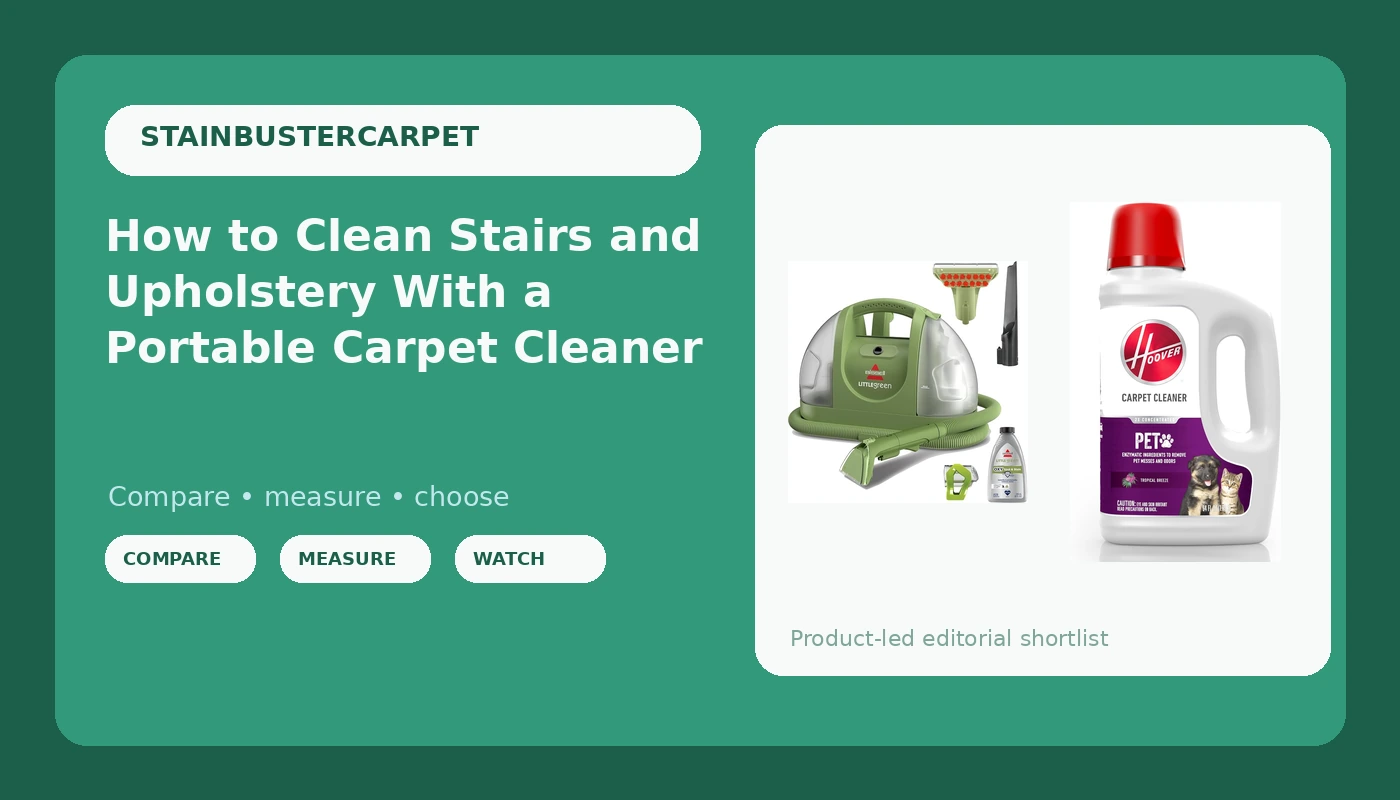
Most of the carpet cleaning in my own house happens on a staircase, not a living room. Twelve steps, a landing, a runner that catches every bit of Phoenix dust that comes through the door, and a dog who prefers the third step from the bottom. A full-size upright is useless up there. What works is a portable carpet cleaner for stairs, a bottle of solution you actually trust, and a method that gets the carpet dry before the sun goes down.
I have cleaned carpets for a living for fifteen years and ran my own residential cleaning business for eight of them. I have emptied a lot of dirty-water tanks, and I will tell you the same thing I tell clients: the tank is the only honest spec on the box. If it comes out clear, the machine did not clean anything. If it comes out like coffee, you did.
This is the workflow I use on stairs, couches, mattresses, and car seats. It is two tools and eight steps, and the steps matter more than the tools.
Why you should trust me
I have been cleaning carpets professionally since 2011 and I still keep a logbook of every machine that goes on a client's floor. Each one gets the same three checks. A dirty-water weigh-in before and after a measured pass on a genuinely stained carpet. A dry-time clock that starts the second the machine stops. And a weight check with a full tank, because my back reviews machines honestly whether I want it to or not.
My current focus is a stair test of four portables on a real staircase with real dirt, one step per machine, dry-time race included. I do not review a machine I have not emptied. I do not believe the word professional printed on a box. And I will not tell you a machine removes every stain, because some stains are furniture now.
How I picked and how I tested
This is not a shopping list of ten machines. It is the short list of what you point at the carpet while you work, and I built it around one question: what does this tool do that a towel and a spray bottle cannot?
The machine has to extract water, not just scrub it in. Extraction is the whole point. A brush that agitates without pulling the water back up just spreads the mess deeper into the pad, and a wet pad is where the smell lives.
The solution has to be dosed correctly and rinsed out. Residue is the most common reason a carpet looks clean for a week and then attracts dirt like a magnet. Leftover soap is sticky. Sticky carpet gets dirty faster than clean carpet ever did.
My test criteria, in order: how much water comes back in the dirty tank on a measured pass, how many hours until the carpet is walkable, how heavy the unit is with a full tank, and how the tank empties without spilling down my forearm. That last one sounds petty until you have done it on a client's white tile.
The numbers I trust are simple. A carpet that is walkable in four hours is a good result. A carpet that is still damp the next morning is a problem, not a result. And any machine that makes your arm tired before the job is done gets used less, which means it cleans worse over a year than a lighter machine that gets pulled out every time.
The two things you need before you start
You cannot clean a staircase with a machine you cannot carry up it, and you cannot get a good result with solution that leaves foam behind. Get both right, then start.
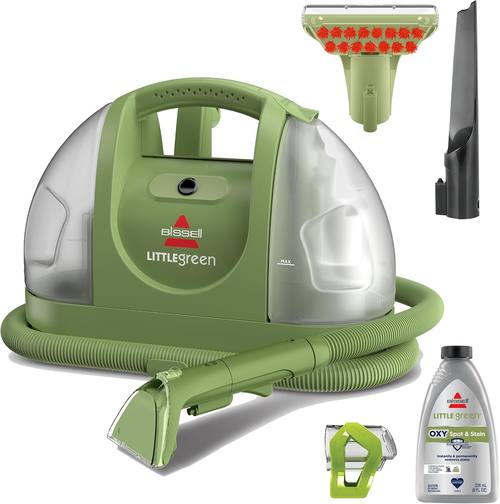
The machine: BISSELL Little Green Multi-Purpose Portable Carpet Cleaner, 1400B
 Visit on Amazon →
This is the shape of machine I reach for on stairs, couches, and car interiors: a small, handheld extractor with a hose and a nozzle you can steer into a step tread or a seat cushion. It is built for exactly the jobs a full-size upright cannot reach, and that is the entire reason it exists. It sprays, it agitates, and it pulls the water back into a tank you can see through, which is the part that matters. A clear tank lets you watch the water go from coffee to tea to nothing, and that is your signal to stop.
Check current Amazon price. It is the machine I would hand to a homeowner with a stairwell and a dog, because it is light enough that you will actually use it and small enough to store in a closet.
Flaws but not dealbreakers: The tank is small by design, so a full staircase with heavy soil means multiple dump-and-refill cycles. Budget for that instead of being annoyed by it. Also empty it before you carry it anywhere, because a full tank on a portable is a spill waiting to happen.
Anyone with stairs, a couch, a mattress, or a car with cloth seats will get more use out of this class of machine than out of a full-size upright.
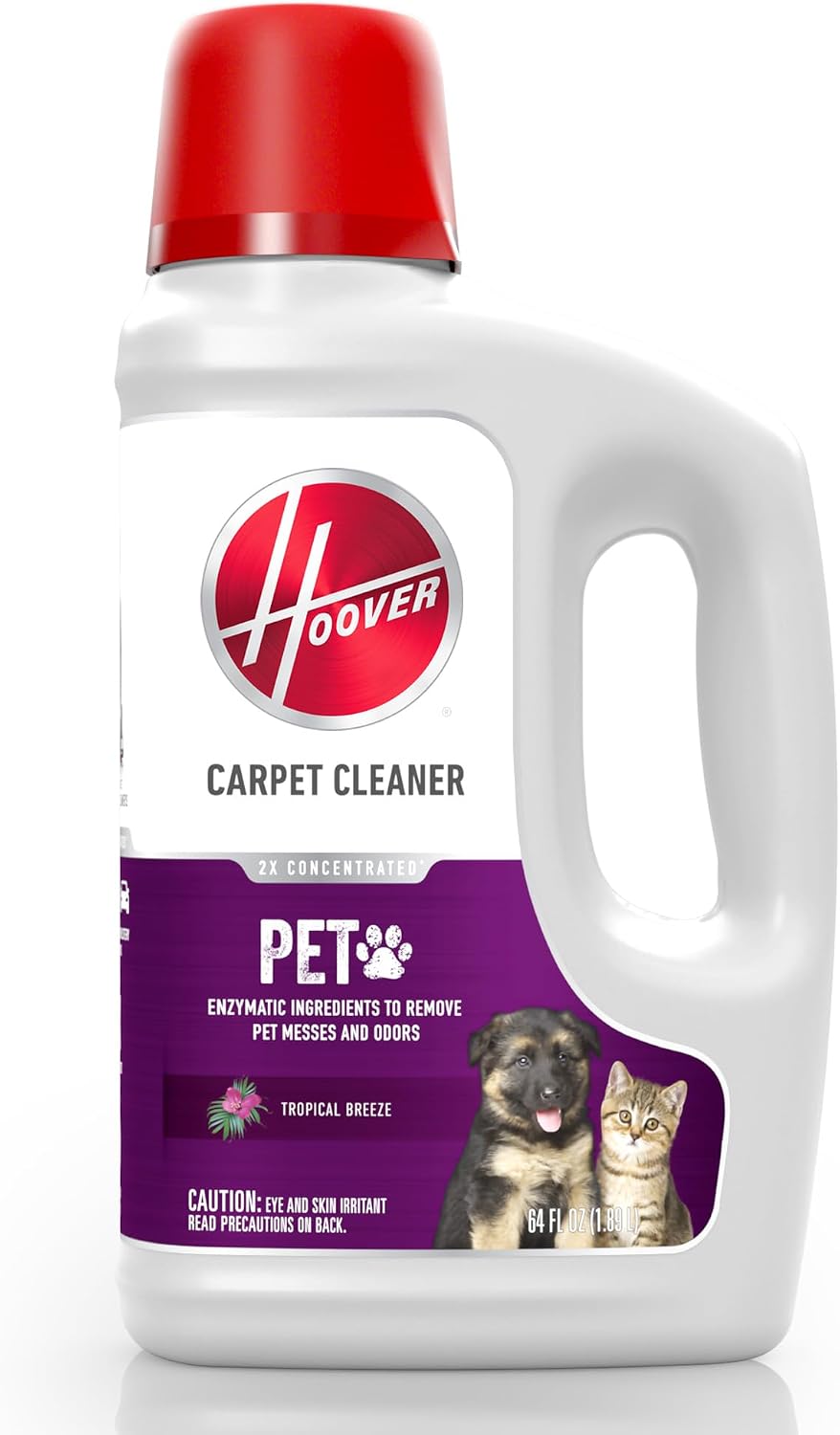
The solution: Hoover Pet Carpet Cleaner Solution, 64 oz., Tropical Breeze Scent
 Visit on Amazon →
Solution is not an accessory, it is part of the machine. A cheap bottle of the wrong stuff can strip color out of a carpet faster than any brush, and I have seen it happen. This one is formulated for pet accidents and the odors that come with them, which covers most of the calls I used to get, and it comes as a 64 ounce bottle, which means a lot of diluted tank fills before you are shopping again.
Check current Amazon price. Mix it at the ratio on the bottle and no stronger. More soap does not mean more clean. It means more residue, and residue is what makes a carpet look dirty again two weeks later.
Flaws but not dealbreakers: Scented solution is a personal call. If you are sensitive to fragrance or you are cleaning for someone who is, run a plain rinse pass with water only after the cleaning pass, or look at the fragrance-free version of whatever brand you are already using. Do not stack two scented products in one tank.
Anyone cleaning up after pets, kids, or a rental deposit will get the most out of a bottle like this.
The eight-step workflow
This works on stairs, upholstery, and car interiors. It works on any extractor, not just the one above. Read it once before you start, because the order is the part people skip.
Step one: Vacuum dry, and vacuum properly. Every bit of loose soil you pull out dry is soil that never turns into mud in your tank. Crevice tool along the stair edges, upholstery tool on the couch, and take your time. This is the least glamorous step and the one that decides the result.
Step two: Test colorfastness in a hidden spot. Under the skirt of the couch, on the back of the bottom stair tread, behind a cushion. Apply a little solution, wait a minute, blot with a white towel. If color transfers to the towel, stop. That carpet is not a wet-clean carpet and no machine changes that.
Step three: Pretreat the traffic lane and the spots. Dwell time does work that scrubbing cannot. Give the solution a few minutes to break down the soil before you extract, and hit the pet spots and the dark traffic lane first, because those need the most passes.
Step four: Mix at the bottle ratio, no stronger. Warm water from the tap, measured solution, fill to the line and not past it. Overfilling a portable tank is how you end up with water running down the outside of the machine and into the pad.
Step five: Work top down, one step at a time. On a staircase, start at the top and work down so you never stand on wet carpet. On a couch, do the back cushions first and the seat cushions last. Small sections, one at a time, and overlap your passes by half the width of the head.
Step six: Dry strokes, no water. This is the step that separates a four-hour dry time from a two-day one. After your wet passes, release the trigger and make two or three slow passes over the same area, letting the nozzle pull water back with nothing new going down. The dirty tank should keep filling even though you are not spraying.
Step seven: Airflow immediately, not later. Fan on the stairs, windows open, HVAC fan running. Moving air does more for dry time than any machine setting. If it is humid, add a second fan. Carpet that stays damp for two days is a mold factory, and I have been called to more of those than I want to count.
Step eight: Empty and rinse the tank, then flush the hose. Dump the dirty tank outside or into a utility sink, rinse it until the water runs clear, and run clean water through the hose for a few seconds. Solution left sitting in a hose turns into a smell you will meet again on the next job.
Where this goes wrong
Fiber type is the first limit. Wool, rayon, viscose, sisal, jute, and anything with a dry-clean-only tag are not candidates for a wet extractor, no matter how good the machine is. Check the manufacturer care guide or test a hidden spot and accept the answer.
Pet urine is the second limit. Surface cleaning handles the stain. It does not always handle the pad underneath, and if you can smell it on a humid day, the pad is the problem. That is an enzyme treatment and sometimes a subfloor conversation, not a stronger pass with the machine.
Wicking is the third. A stain that comes back a day after you clean it has climbed back up the fiber from the pad. Clean it again, dry it faster, and put a fan on it.
And no machine removes every stain. Coffee, wine, and pet accidents respond well when they are fresh. A set-in stain from three years ago may be permanent, and telling a client that honestly is part of the job.
The competition and why it lost
A full-size upright beats a portable on any open room, every time. Wider cleaning path, bigger tanks, fewer refills, and a cord long enough to cross a hallway. It is also heavy, and heavy means it gets used less. If you own both, use the upright for the living room and the portable for everything with a corner.
Cordless portables are tempting for quick spots, but a short runtime and a small tank make them a spot tool, not a stair tool. A rental machine is a genuine tank, but the solution cost adds up fast and you have to drive it back.
And a steam cleaner is not a carpet cleaner. It sanitizes a hard surface. It does not extract soil from carpet fiber. Different tool, different job, and mixing them up is how people end up with a wet carpet and no cleaner result.
What this all costs
The machine is the one-time cost. The solution is the recurring one, and that is where the math actually lives. A concentrate you dilute yourself costs less per tank fill than a ready-to-use bottle, and it takes up less shelf space. The 64 ounce bottle above is the kind of size that gets you through a season of stair cleaning instead of a weekend.
The real cost is water, and it is the cost people ignore. Too much water means longer dry time, which means more fan hours, more risk of odor, and sometimes a repeat cleaning. The cheapest thing you can do is make fewer, better passes with proper dry strokes.
Check current Amazon price on both before you buy, because the bundle math changes more often than the product does.
The short version
Vacuum dry. Test a hidden spot. Pretreat and wait. Mix at the ratio. Work top down in small sections. Finish every area with dry passes. Move air immediately. Rinse your tank and hose before you put it away.
That is the whole job. Your stairs were built to be cleaned. Let them dry.