Most carpet cleaning advice starts with the machine. Mine starts with the water, because water is the only part of the job you can measure. If you want to deep clean carpet at home without turning your living room into a swamp for three days, you have to control three things: how much water goes in, how much comes back out, and how fast the rest dries.
I cleaned carpets professionally for fifteen years and ran my own residential cleaning business for eight of them. I work in Phoenix now, where a wet carpet is not a small inconvenience. Our air is dry enough that a properly extracted carpet is walkable in socks by the afternoon, and a badly extracted one smells like a basement by the second day. The difference between those two outcomes is almost never the logo on the box. It is technique, plus a machine that actually recovers water.
This is a how-to guide, not a buying guide. The method below is what I use on client carpets and my own, and it works with a rented machine or the two pieces of gear I keep in my own closet. Nothing here needs a truck mount.
Why you should trust me
I have cleaned more carpets than most people have walked on. Fifteen years, hundreds of houses, and a logbook that goes back to my first solo job. Every machine that comes through my hands gets the same treatment: a measured dirty-water test on a genuinely stained carpet, a dry-time clock, and a weight check with a full clean tank, because my back is the real review.
That logbook is the reason I write this way. I do not care what a box claims about suction. I care what the dirty-water tank weighs when I am done, because the tank is the proof of work. If the tank comes out clear, the machine did not clean. It just made the carpet wet.
How I picked and how I tested
I test every machine the same way, and I recommend gear the same way. First, the measured dirty-water test. I run the machine over a known stained area at a fixed pace and weigh the recovery tank before and after, because the difference is the only honest number in the room. Second, a dry-time clock. I mark the hour the machine stops and check the carpet every thirty minutes until it is walkable in socks. Third, a weight check, because a heavy machine with a full tank gets hauled out less often than a light one, and a machine in the closet cleans nothing.
The gear below is not the whole category. It is the small kit that covers the two jobs that matter: putting water and solution into the carpet at a controlled rate, and lifting the dirt back out again. One upright, one solution. That is enough for a whole house if you do the work correctly.
The number I trust most in this whole process is not a suction rating. It is dry time. Hours until walkable is the spec everyone ignores until it rains inside. A carpet that stays damp past 24 hours is a mold factory with a nice pile.
The gear that does the work
You need two things. A machine that sprays, agitates, and extracts, and a solution that does not leave residue behind. Everything else in the aisle is optional.
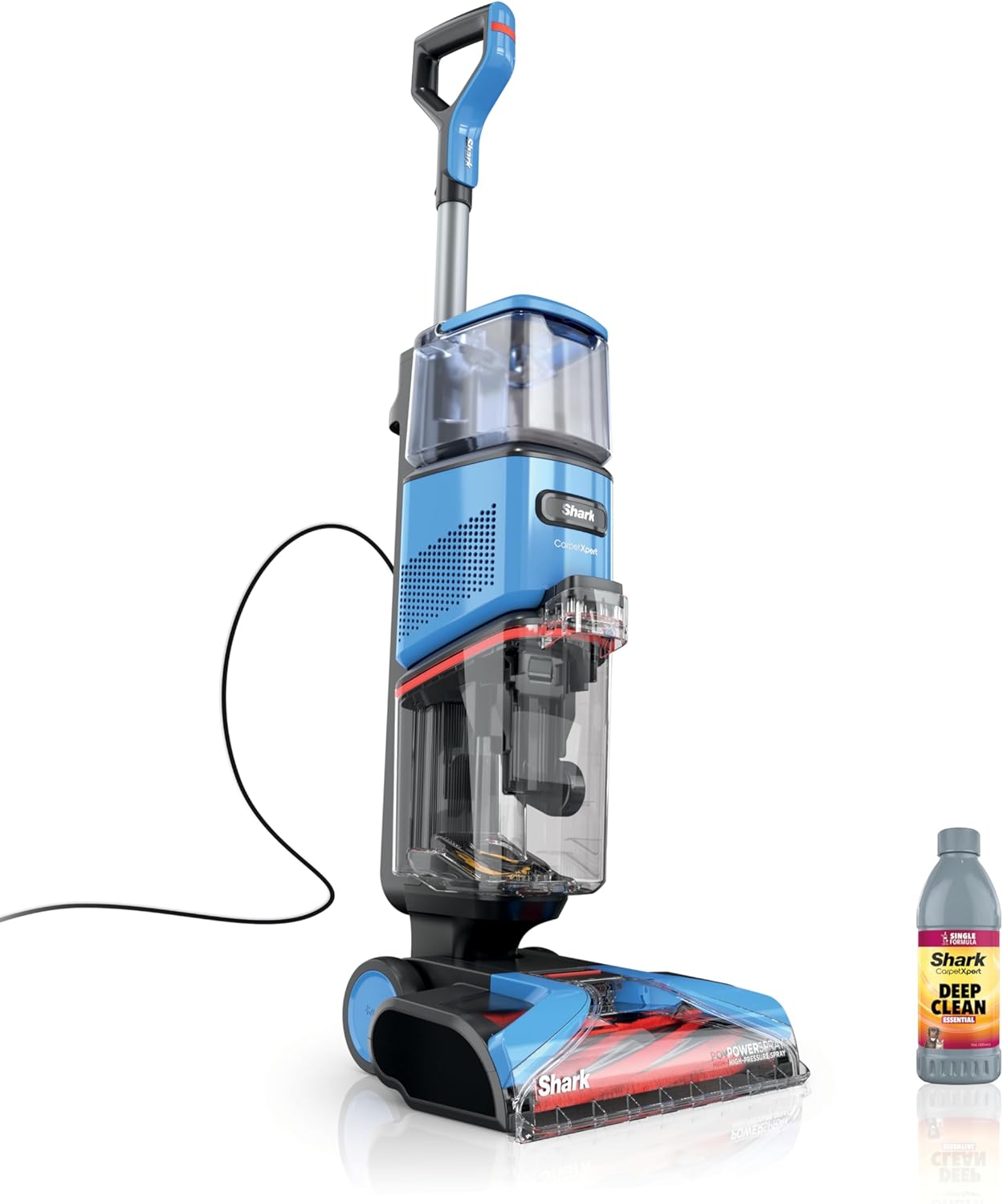
The machine: Shark CarpetXpert Upright Carpet & Area Rug Cleaner, EX121BRN
 Visit on Amazon →
This is the class of machine I reach for on open rooms: an upright carpet and area rug cleaner built for whole-floor passes rather than spot work. An upright covers a hallway or a bedroom in long, overlapping strokes, which is exactly what proper extraction requires. You cannot do two wet strokes followed by four dry passes with a machine you have to drag step by step across the room and reposition every few feet.
Who it suits: anyone with wall-to-wall carpet in a main living area, a hallway runner, or a large area rug. If your cleaning list is mostly stairs, a couch, and a car trunk, this is more machine than the job needs, and a portable will serve you better and get used more often.
What to verify before you buy, because these are the things that decide whether you actually use it: how the dirty tank empties, how much it weighs when the clean tank is full, and whether the tanks come off without a wrestling match. Tanks that spill when you empty them are the number one reason people stop deep cleaning their own carpet. The dirty water is the proof of work, but only if you can get it to the sink without wearing it.
Flaws but not dealbreakers: uprights are the wrong tool for stairs and upholstery, full stop. Keep a portable or a handheld attachment for those jobs and let the upright do the floors it was built for.
Homeowners with a few rooms of carpet and a once-a-season cleaning habit will get the most out of this one.
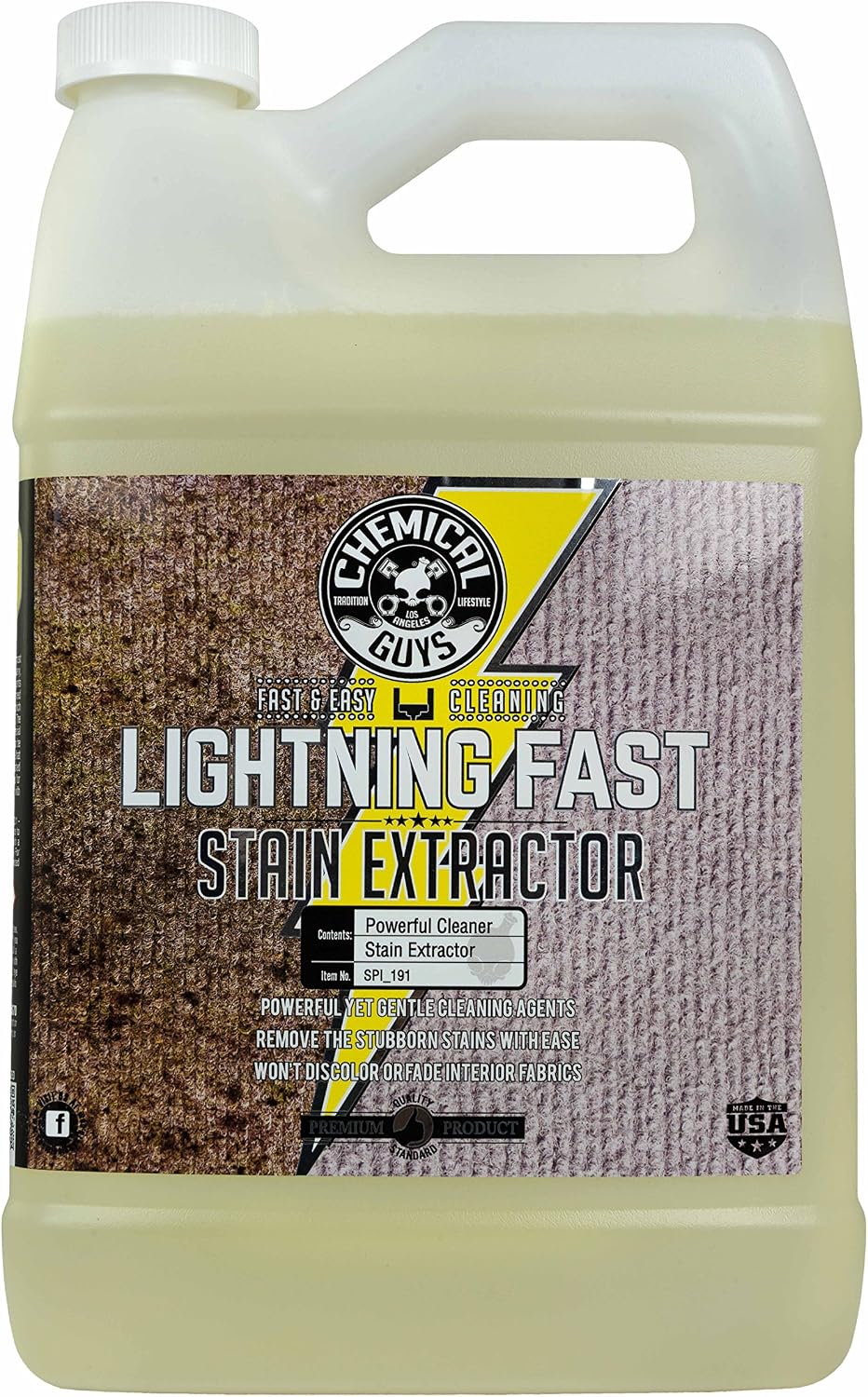
The solution: Chemical Guys, Lightning Fast Carpet & Upholstery Stain Extractor, 1 Gallon
 Visit on Amazon →
The cleaning solution is part of the machine. A cheap machine running expensive solution is not a cheap setup, and an expensive machine running the wrong solution will leave a sticky residue that grabs dirt faster than before you cleaned. This one is a gallon of carpet and upholstery stain extractor, which means it is meant to go into the tank of an extractor and get pulled back out with the water, not scrubbed in and left behind.
Who it suits: anyone running an upright or a portable extractor who wants one jug that covers carpet, rugs, and upholstery instead of three bottles that each do one thing. A gallon also lasts, which matters because dilution is where people go wrong. Mix it to the label, not stronger. Stronger is not cleaner. Stronger is residue, and residue is a dirt magnet.
Two things I will not pretend about. First, no solution removes every stain. Some stains are furniture now, and the honest answer is a professional with the right chemistry and a lot of patience. Second, always test a hidden corner for colorfastness before you touch a visible square foot. Cheap, over-concentrated solution is what strips color, and I have seen it happen on a wool rug that cost more than my car.
Flaws but not dealbreakers: a gallon is a commitment if you clean one small rug twice a year. Split it with a neighbor, or store it somewhere it will not freeze. Foaming is the other thing to watch. If the tank foams up, you used too much, and foam does not extract.
The actual workflow
Now the part you came for. This works with any extractor, upright or portable. The order matters more than the equipment.
Step one: Vacuum first, and vacuum slowly. Dry soil is most of what is in your carpet. If you extract over dry dirt, you turn it into mud and push it deeper. Two slow passes over every section, more on traffic lanes. This is the step everyone skips and it is the reason their carpet looks the same after cleaning.
Step two: Test a hidden corner. Pick a spot behind a couch or inside a closet. Apply a little diluted solution, wait a few minutes, and blot with a white cloth. If color transfers to the cloth, stop and call a professional. This takes two minutes and saves rugs.
Step three: Pre-treat spots, then wait. Hit the stains first and give the solution dwell time, five to ten minutes, so the chemistry has a chance to work. Do not scrub hard. Aggressive scrubbing fuzzes the pile and spreads the stain sideways. Blot, do not grind.
Step four: Mix to the label, never stronger. Over-concentrating is the most common mistake I see in homes. More solution does not mean more clean. It means more residue left in the fibers, which then grabs every bit of dust that walks past.
Step five: Two wet strokes, then dry passes. This is the whole technique in one line. Pull the trigger for two slow overlapping strokes, then release the trigger and make three or four dry passes over the same strip. The dry passes are the extraction. Most people spray the whole room and never do a dry pass, which is how a carpet ends up wet for two days.
Step six: Watch the dirty tank. When the recovery tank fills, the machine stops recovering and starts leaving water behind. Empty it before it is full, not after. The tank is the proof of work, and a full tank means the next pass is a waste of time.
Step seven: Keep the strokes overlapping. Half a pass of overlap on every stroke. Missed strips show up as stripes when the carpet dries, and stripes mean you are doing it twice.
Step eight: Start the drying clock immediately. Fans pointed across the carpet, not up at the ceiling. AC on. If the humidity outside is high, close the windows and run a dehumidifier. If you have ceiling fans, run them. Air moving across the surface is what dries carpet, not heat.
Step nine: Stay off it. Socks at the earliest, bare feet never. Furniture back only when the carpet is fully dry, and put foil or plastic squares under the legs if you are impatient, because damp wood and damp metal both stain carpet.
Step ten: Groom and re-vacuum after it dries. Once it is dry, vacuum again to lift the pile and pick up anything the cleaning loosened. The carpet will feel different. That is the point.
Mistakes that make carpet wet for days
Over-wetting is the big one. It comes from spraying more than you extract, which is a technique problem, not a machine problem. Fix the ratio of wet strokes to dry passes and half your complaints disappear.
Too much solution is the second. Residue holds moisture, holds dirt, and makes the carpet feel stiff when it dries. If your carpet feels crunchy the day after, you used too much.
Skipping the dry pass is the third. I have watched people run a machine over a whole room with the trigger down the entire time and then wonder why the carpet squelches. That is not cleaning, that is irrigation.
Cleaning in humid weather is the fourth. In Phoenix I can clean at noon and have a dry carpet by dinner. Somewhere with 80 percent humidity, the same job takes overnight and needs a dehumidifier running. Plan around the weather, not the calendar.
And the fifth: cleaning a carpet that has been wet before without fixing the source. If a carpet smells musty before you start, the moisture is coming from somewhere, and a cleaner will not fix a leak.
What this all costs
The math here is simple and it is not about the sticker. The machine is a one-time cost. The solution is the consumable, and a gallon at the correct dilution goes a long way, which is why buying concentrate instead of ready-to-use bottles is the move for anyone cleaning more than one room. Check current Amazon price on both before you commit, and compare that against what a single professional cleaning of your square footage would run. For most homes, the break-even lands after two or three cleanings, and everything after that is your own labor, which is the real cost.
The variable people forget is dry time. A carpet that dries in four hours is back in service the same day. A carpet that stays wet for two days is a lost room, a smell you will chase for months, and possibly a pad replacement. Technique is what buys you the fast dry, and technique is free.
The short version
Vacuum slowly. Test a hidden corner. Pre-treat and wait. Mix to the label. Two wet strokes, four dry passes. Empty the dirty tank before it is full. Point fans across the carpet and stay off it. Do that and your carpet will be dry by tonight and clean for months.
That is the job. The dirty-water tank tells you whether you did it.